How to keep food scraps for composting in a small apartment
· Editorial team baltimorenewsethan.com
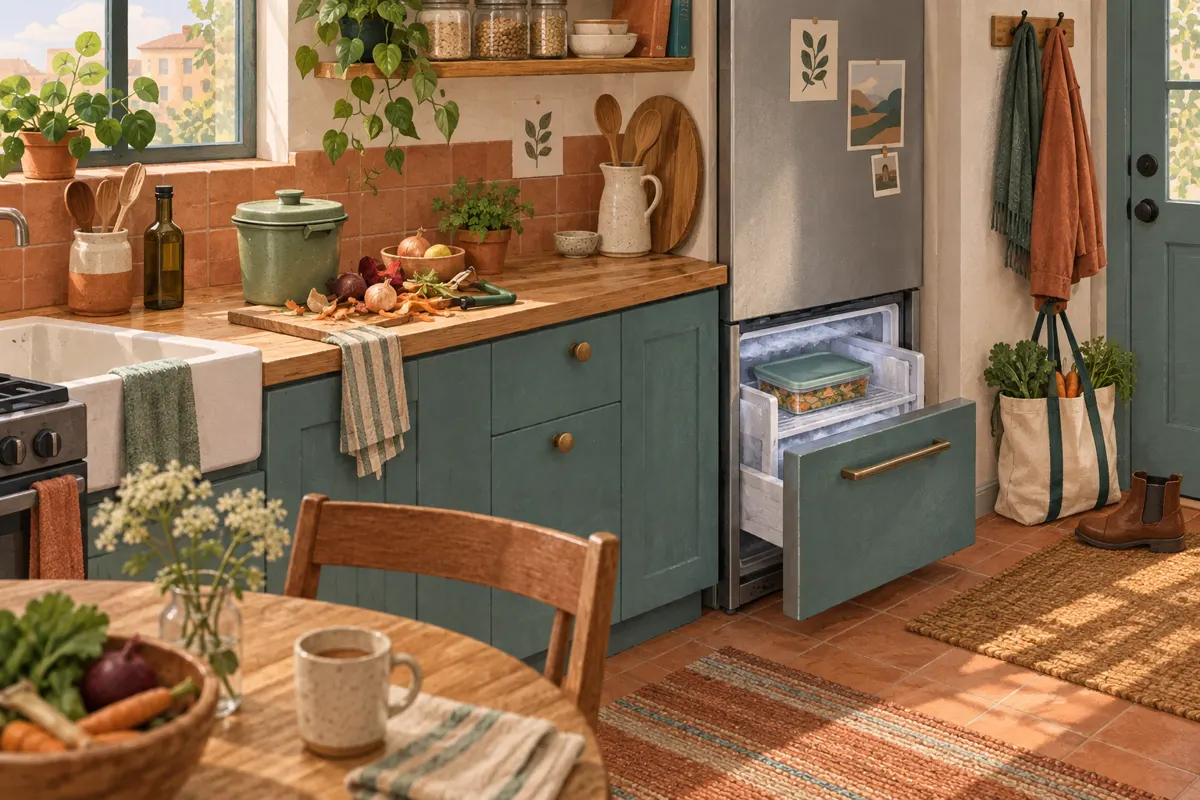
Start with your compost drop-off’s accepted-materials list, then give approved scraps a covered container near where you prepare food. For a small apartment, our proposed routine is to transfer scraps into a freezer-safe container after cooking and empty it on a regular drop-off trip. You are storing ingredients for someone else to compost, so the setup can stay simple.
Check the drop-off rules before collecting
Find the receiving program’s own instructions before deciding what belongs in your container. General composting advice can provide examples, but it cannot tell you what a particular collection service accepts. The supplied sources do not establish current Baltimore drop-off locations, schedules, or rules.
Growing a Greener World lists fruit and vegetable scraps, coffee grounds and filters, and eggshells as home-compost ingredients. It advises keeping meat, bones, fats, oils, and dairy out of that home pile because they can create odors and attract pests. Use those examples as questions for your receiving program; its accepted list may differ.
- Which food scraps are accepted, including cooked food, meat, dairy, and bones?
- Are coffee filters, tea bags, paper towels, or other paper products allowed?
- Are liners or bags accepted, and must they be removed before emptying?
- Does the program accept frozen scraps, and how should they be delivered?
- Where and when can you drop off, and do you empty your container or leave an approved bag?
Keep the answers where everyone who cooks can see them. A short household note containing only confirmed items is easier to follow than a broad list of things that might be compostable. Packaging labeled compostable still needs the receiving program’s approval.
Give your collection container a fixed home
Choose a covered container that fits the space you can consistently spare. Compostic describes kitchen locations such as under the sink and beside the sink; Growing a Greener World describes keeping a collection bin in a kitchen cabinet. These are useful placement examples, although both sources discuss systems connected to home composting.
Our proposed setup is a small, washable container within reach during meal preparation. Put it beside your cutting board while cooking, then return it to its assigned spot. If the counter is crowded, a reachable cabinet can work, provided moving the container in and out is easy enough to become a habit.
For drop-off collection, you do not need to reproduce the indoor compost-bin construction described in Compostic’s article. Skip the soil, bedding, and drilled holes. Your container’s job is to hold scraps until delivery, not to run a composting process inside the apartment.
Use freezer space as a collection buffer
If your program accepts frozen deliveries, consider reserving one freezer-safe container for scraps. This is an editorial storage proposal: neither supplied source evaluates freezer collection or establishes how long scraps should be stored. Choose a container intended for freezer use and follow its instructions.
- Reserve a defined shelf space or corner so the collection has a clear size limit.
- Gather accepted scraps in your small kitchen container during meal preparation.
- Transfer them to the freezer container after cooking and close it.
- Keep the container identifiable so household members can distinguish scraps from stored food.
- Arrange drop-off before the reserved space fills.
A broad, shallow container may fit your freezer better than a tall kitchen pail. Check the available space before choosing one. If you use a reusable bag for storage, confirm whether you must empty it at drop-off and bring it home.
If freezer space is scarce, start with a smaller collection and more frequent trips. The sources offer no universal room-temperature holding time, so there is no evidence here for promising that a covered countertop pail will remain odor-free for a week.
Build collection into your kitchen routine
Attach collection to something you already do: peeling vegetables, clearing the cutting board, or cleaning up after dinner. Growing a Greener World’s author describes a household agreement to empty the kitchen collection daily. That example supports having a clear routine, but it is not a tested storage deadline.
Our proposed routine is to check scraps against the accepted list as they are generated, then transfer them after the meal. Sorting at that point avoids building a mixed container that someone must pick through later. Keep wrappers, produce stickers, and other unapproved materials out.
In a shared apartment, agree on who transfers scraps and who makes the trip. If the container develops an unpleasant smell or attracts insects, treat that as a reason to empty and clean it and adjust the routine. A lid should not become an excuse to postpone collection indefinitely.
Make drop-off part of an existing trip
Choose a recurring errand that fits the receiving program’s hours, then add a reminder to bring the scraps. This is a proposed habit, not a prescribed weekly schedule. Let the amount you generate, your storage capacity, and available drop-off times determine the frequency.
- Check the drop-off instructions and access times before leaving.
- Close your transport container and place it in a washable carrier to contain any leakage.
- Empty scraps as instructed, removing any bag or liner the program does not accept.
- Bring reusable containers home, wash and dry them, and return them to their assigned spots.
If you repeatedly run out of space before the trip, change the schedule or collect a smaller range of accepted scraps while you establish the habit. Start with a setup you can empty reliably. Expand collection when the routine fits your kitchen and your week.