How to organize a family board game night with mixed ages
· Editorial team baltimorenewsethan.com
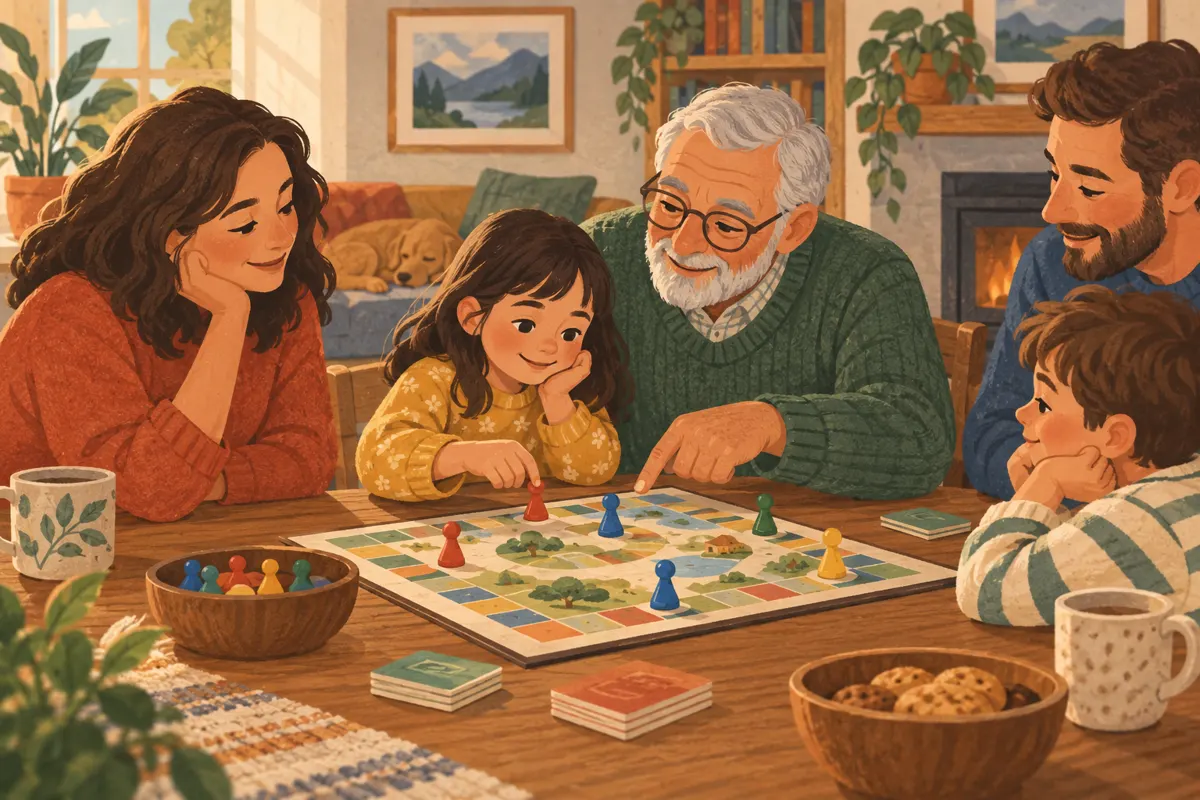
Organize a mixed-age family board game night by choosing easy-to-explain games with meaningful choices, giving younger children flexible roles, and keeping rounds short. Prepare two or three options before everyone sits down, demonstrate a turn, and agree on when to stop. The aim is for each person to participate without making older players spend the evening waiting or teaching.
Choose games by what players can do
Start with the youngest participant’s current abilities, then check whether the game offers enough decisions for older children and adults. Reading, counting, remembering instructions, and handling pieces matter more to this choice than age alone. A child who needs help reading may still enjoy choosing a route or spotting a match.
Our proposal is to prepare a small menu: one familiar warm-up, one game with more choices, and one quick backup. Let family members choose from that menu instead of opening every box. Rotate who gets first choice on future nights.
- Short turns with little waiting between actions.
- Pictures, colors, or shapes when independent reading would be a barrier.
- Cooperative goals or team play when players need different levels of support.
- Adjustable difficulty or a simple version of the rules.
- A clear finish that fits the time available.
Give younger children a real role
Pairing a younger child with an adult or sibling can make a more demanding game accessible. Agree on the partnership before starting, including who handles reading and which decisions the child will make. Helping should leave room for the child to act, rather than turning them into a spectator.
- The older partner reads a card; the younger partner chooses between two legal actions.
- The child rolls the die and moves the piece; the partner helps count spaces.
- Partners discuss a shared goal, then alternate who makes the final decision.
- An adult explains unfamiliar symbols while the child selects the tile or card.
Ask older children whether they want a partner, and rotate helpers so one person does not carry that job all evening. When adapting a competitive game, explain the change to everyone before play begins. Keep that agreement through the round, then reconsider it together afterward.
Set up the space and teach one turn
Use a stable surface where everyone can see and reach the board. Check seating and lighting before opening the game. Keep snacks and drinks to the side so the playing area stays clear, and reduce background noise if it makes explanations harder to hear.
- State the goal in one sentence: what players are trying to achieve.
- Show the pieces players will use first, leaving other details until needed.
- Demonstrate a complete turn, including how it ends.
- Let everyone try a practice turn and ask questions.
- Reset the board if necessary, then begin the scored game.
Know the basic rules before gathering everyone. If a question interrupts play, one person can check the rulebook while the others stay ready. Explain the answer briefly and return to the game; save discussions about optional variants for the break.
Keep rounds short and choices moving
For a first evening, our proposed schedule is a 10-minute warm-up, a main game of about 20 minutes, and an optional final round. These are planning targets, not requirements. Choose games that naturally fit the window, or agree on a stopping point before starting a longer one.
Help players prepare during other people’s turns. Keep available actions visible and answer specific questions without presenting every possible strategy. When a younger player gets stuck, offer a manageable choice instead of taking over. Give older players time to make their own decisions, too.
Between games, offer a stretch or snack break and check whether people want to continue. If younger children finish earlier, an optional older-player game can follow. Arrange an appropriate activity and supervision for children who leave the table so their departure does not interrupt every turn.
Finish calmly and make the next night easier
Set a simple expectation at the start: celebrate good moves, allow questions, and avoid mocking mistakes. Acknowledge disappointment when someone loses without changing the result. Offer a break if frustration takes over, and avoid making another round compulsory.
Return each game’s pieces to its box before opening another. At the end, ask everyone which game they would play again and what felt difficult. Use those answers to adjust the next night’s choices, partnerships, or length. A manageable evening is easier to repeat than one that runs past everyone’s patience.