How to pack for a two-night train trip with one small bag
· Editorial team baltimorenewsethan.com
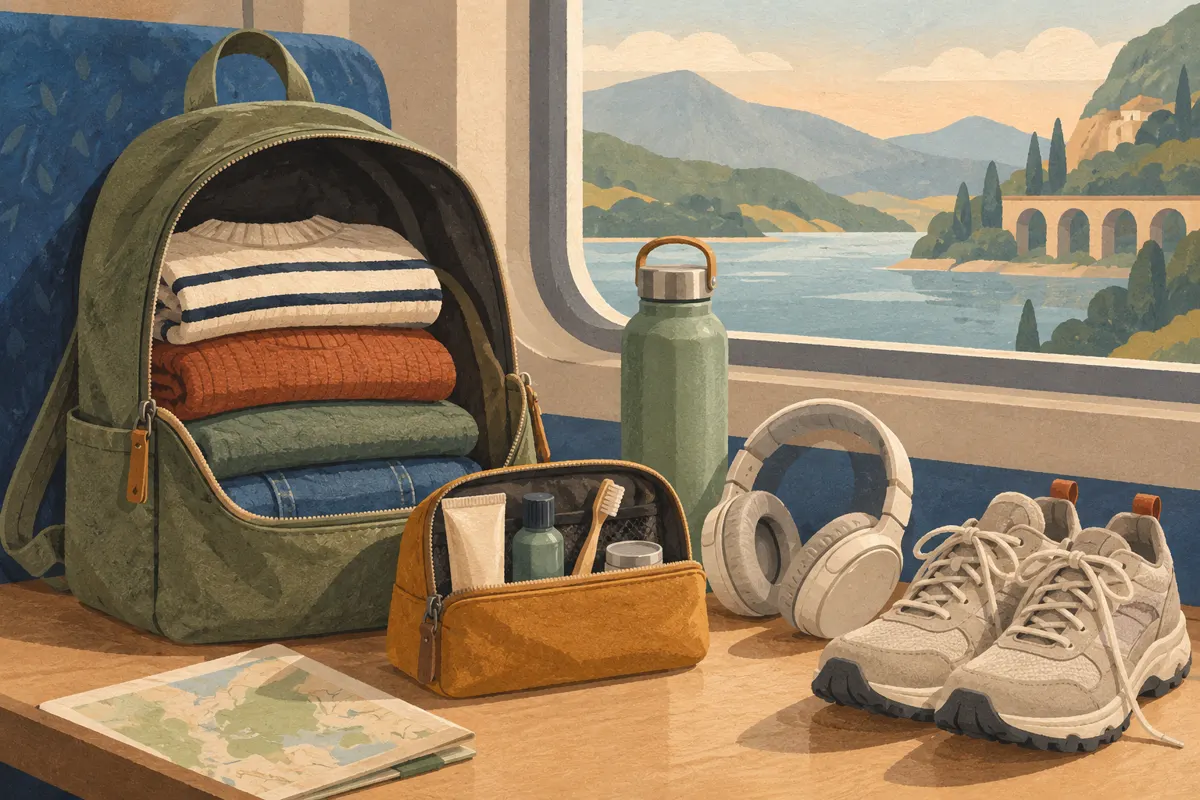
For a two-night train trip with a short city stay, wear your bulkiest clothes, pack two changes of underwear and tops, and keep train essentials together at the top of one small bag. The proposed checklist below assumes three travel days and two nights away. If either night is spent onboard, move your sleepwear and toothbrush into the accessible part of the bag.
Choose your bag around what you need to carry
Start with a small backpack or soft-sided bag you can comfortably carry through a station and around the city. Before packing, check your train operator’s luggage allowance and any requirements for your booked accommodation. A bag described as small is not automatically suitable for every service.
As an editorial packing proposal, divide the space into three areas: clothes at the bottom, toiletries in the middle, and journey essentials at the top. Use existing pouches if you have them. Leave enough room to return items without carefully rebuilding the bag each time.
Plan three days of outfits before adding extras
The following proposed outfit plan uses one pair of everyday bottoms and one pair of comfortable walking shoes throughout the trip. Choose tops that work with those bottoms and your outer layer. Adjust for the forecast, planned activities, and how often you prefer to change clothes.
- Day one, outbound journey: wear your everyday bottoms, first top, walking shoes, and sweater or light jacket.
- Day two, city stay: wear your second top with the same bottoms and shoes.
- Day three, return journey: wear your third top and reuse the outer layer.
- Pack two fresh sets of underwear and socks, plus a compact sleep outfit.
- Add spare bottoms only if your activities, weather, or personal needs make them necessary.
A sweater gives you an adjustable layer onboard. For a night on the train, comfortable sleep clothing, warm socks, an eye mask, and earplugs are useful options. Choose sleepwear you would feel comfortable wearing when walking to the restroom.
Use a compact checklist for the rest
Once clothes are settled, add the items you expect to use. The sources’ train checklists include documents, personal medication, basic toiletries, charging equipment, and entertainment. This proposed short-trip version keeps those categories compact.
- Documents and money: ticket, required identification or passport, payment card, and any necessary destination documents.
- Health and hygiene: personal medication, toothbrush, toothpaste, deodorant, and your essential skin or hair products in small containers.
- Quick cleanup: tissues and hand sanitizer; wipes if you use them.
- Electronics: phone, charging cable, and power bank; a plug adapter if needed for your destination.
- Entertainment: headphones and one book or e-reader, or downloaded audio on your phone.
- Food and drink: a water bottle and a modest amount of food suited to the journey.
- Useful extras: sunglasses, an eye mask, and earplugs when relevant.
Download entertainment before departure: onboard internet may be unreliable. Check food availability for your service before deciding how much to bring. As an editorial food proposal, choose familiar snacks that are easy to eat, produce little mess, and do not require cutlery or refrigeration.
Keep the first things you will need within reach
Keep a small essentials pouch accessible during the ride. Both source checklists recommend having frequently used items or valuables close at hand. For a one-bag trip, that pouch can travel inside your main bag and come out once you are seated.
- Place clothes and a thin bag for worn laundry at the bottom.
- Put toiletries above the clothes, with liquids closed securely.
- Place your journey pouch at the top: headphones, tissues, sanitizer, charging cable, and any items needed during the ride.
- Keep your ticket, identification, phone, and payment method in a secure, accessible pocket.
- Put water upright in a bottle pocket, if available, and keep food reachable.
- For overnight travel, put sleepwear, your toothbrush, eye mask, and earplugs beside the journey pouch.
Do one final access and carrying check
Close the bag, put on your travel outfit, and carry everything for a few minutes. Then retrieve your ticket, water, and headphones without removing clothes. If that takes a full unpacking, change the layout.
Remove duplicate chargers, extra entertainment, and clothes without a planned use. Keep necessary medication and documents. Check that the bag still closes easily with your outer layer inside, since you may want to take it off onboard or during your city stay.