How to roast vegetables with different cooking times on one sheet pan
· Editorial team baltimorenewsethan.com
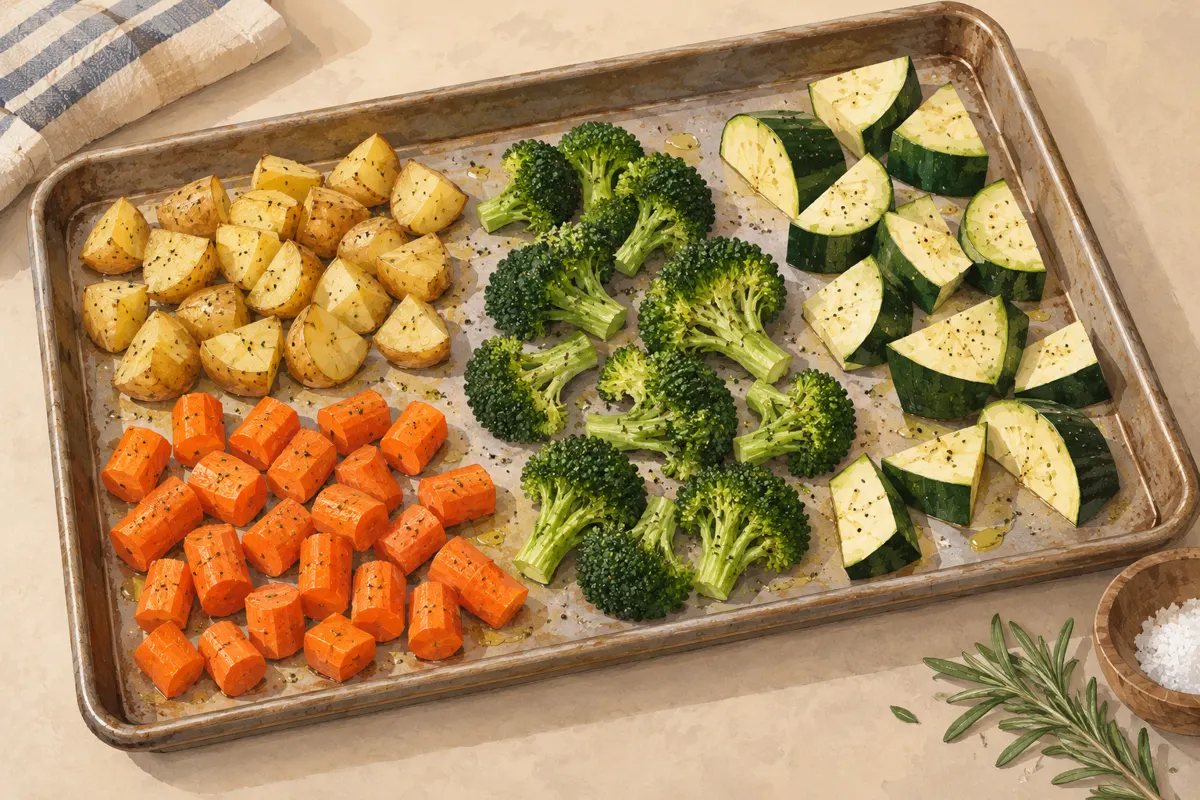
To roast vegetables with different cooking times on one sheet pan, cut firm vegetables smaller, give them a head start, and add tender vegetables later. Keep everything in a roomy single layer so the vegetables can brown. Check each type separately and remove any pieces that finish before the rest.
Group vegetables by how quickly they cook
Start by looking at your vegetables before you chop them. Firm roots usually need more time than tender, watery vegetables. You do not need a precise roasting chart to combine them successfully; you need an order for adding them and a way to check when each group is ready.
- Start first: potatoes, carrots, parsnips, and turnips.
- Add next: broccoli, cauliflower, and green beans.
- Add later: zucchini and leeks, which cook more quickly.
Treat these groups as a starting point. A thick carrot chunk and a thin carrot slice will not finish together. The size and thickness of the pieces matter alongside the vegetable itself, so prepare each group with the whole pan in mind.
Cut firm vegetables smaller and tender ones larger
Keep pieces reasonably consistent within each vegetable, but do not make every vegetable the same size. Smaller pieces help dense vegetables cook sooner; larger pieces give quick-cooking vegetables more time before they soften too much. Pay attention to thickness, especially with carrots and other roots.
As an editorial proposal for a simple combination, cut potatoes into small chunks, carrots into relatively thin pieces, and zucchini into thicker chunks. This gives the roots a better chance of becoming tender while the zucchini still holds its shape. Staged additions provide another way to control the result.
If you prefer large potato wedges or thick pieces of parsnip, give them a longer head start. Avoid trying to compensate by cutting delicate vegetables into tiny pieces: those may soften before the roots are ready.
Leave space for every staged addition
A crowded pan makes browning harder because moisture collects around the vegetables. Spread the pieces in one layer, with some exposed pan between them. Before roasting the first group, make sure the pan will still have room when you add the remaining vegetables.
- Toss each group with olive oil and seasonings before adding it to the pan.
- Keep vegetable groups in separate areas so you can check, turn, or remove them individually.
- Avoid piling new vegetables on top of the ones already roasting.
- If everything will not fit comfortably, reduce the batch or use another pan.
Using one sheet pan is convenient, but its capacity sets the limit. Smaller cuts can help with timing; they cannot solve overcrowding.
Add vegetables in stages
The following sequence is an editorial proposal for putting the method into practice. Use an oven heated to about 400°F, close to the source’s suggested 200°C roasting temperature. Let tenderness and browning guide each addition instead of assuming every mixture needs the same total time.
- Prepare all the vegetables and keep the cooking groups separate. Coat the roots with oil and seasonings, then spread them on the sheet pan.
- Roast the roots first. Check a thick piece: once it has begun to soften but still offers resistance, turn the pieces and assess the space on the pan.
- Add broccoli, cauliflower, or green beans if using them. Spread them in the reserved space and continue roasting.
- Add zucchini or leeks toward the end, when the slower vegetables are approaching tenderness.
- Check each group separately. Remove finished vegetables to a serving dish and let any firmer pieces continue roasting.
Check tenderness and adjust the next batch
Check both texture and color. Test a thick root piece with a fork or knife; surface browning alone does not tell you whether the center is tender. For softer vegetables, look for the texture you enjoy and remove them before they collapse.
If roots remain firm when the zucchini is ready, remove the zucchini and keep roasting the roots. Next time, cut the roots thinner or start them earlier. If everything softens with little browning, leave more space on the pan. Change one thing at a time so your next batch is easier to judge.