How to set up a shared entryway when there is no coat closet
· Editorial team baltimorenewsethan.com
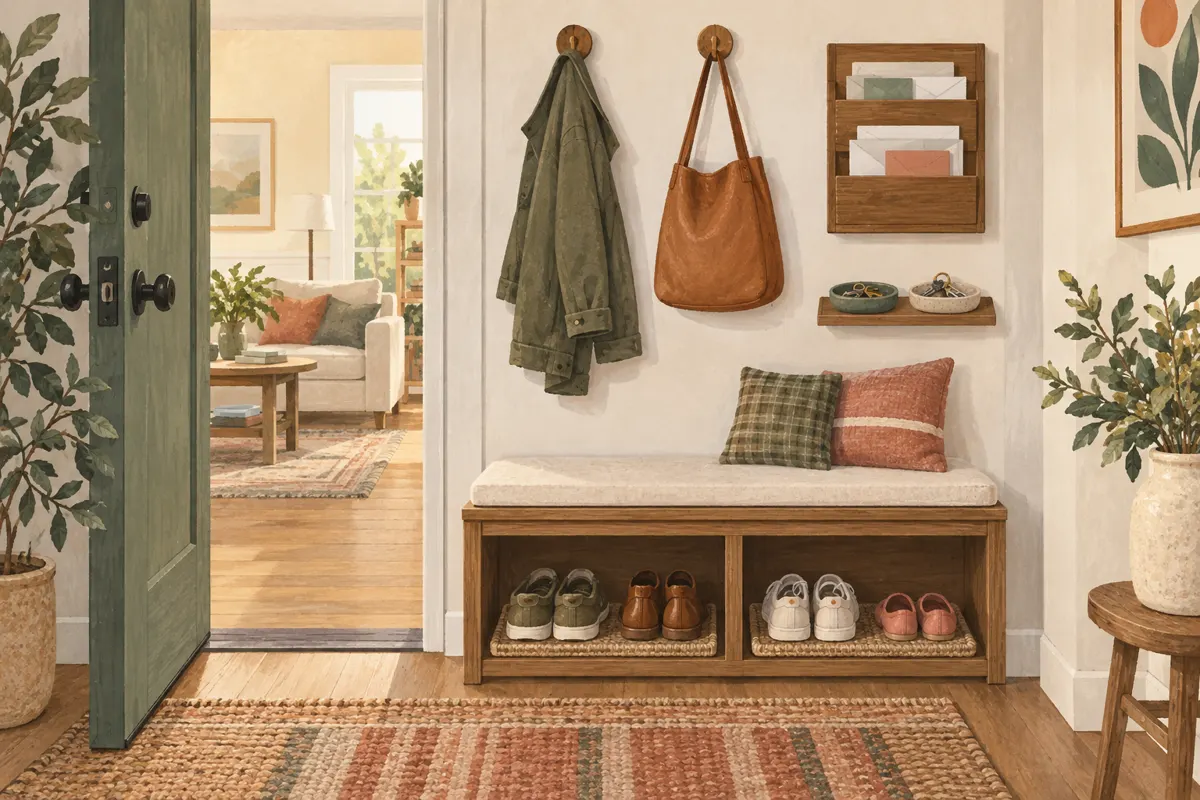
Set up a shared entryway by giving each roommate a defined shoe space, a place for an everyday coat or bag, and a small container for keys. Add one divided mail holder, and keep the doorway clear. Use the entrance for items you need daily; store spare shoes, seasonal coats, and bulky gear elsewhere.
Start with the doorway and what you actually carry
Before choosing storage, gather the things everyone regularly drops near the door. Include shoes, jackets, backpacks, keys, umbrellas, and incoming mail. Separate everyday items from things that only occasionally pass through. The sources suggest assessing belongings before selecting organizers and using vertical space where the entrance is narrow.
- Open the front door fully and check the path into the apartment. Keep storage outside the door swing and away from the route everyone uses.
- Measure the available wall space and floor space. Include the depth of shoes and hanging bags, which can project beyond their organizers.
- Agree on what stays at the entrance: for example, one everyday jacket, one bag, and one or two pairs of shoes per person.
- Try the arrangement with containers you already own before buying anything.
If the entrance cannot comfortably hold furniture, skip the console or bench. A small shoe tray and a few suitable hooks may cover the daily routine. Keep overflow in bedrooms rather than stretching the entryway’s capacity.
Give each roommate a clear share of the space
A proposed roommate arrangement is to divide storage by person, with a small shared area for visitors. Give everyone a comparable amount of usable space. That might mean one section of a shoe rack, one hook, and one key dish each. Names or different container colors can make the assignments easy to follow.
- Shoes stay within each person’s assigned shelf or tray section.
- A full hook means an older jacket or bag goes back to the bedroom before another is added.
- Shared space stays available for a visitor’s shoes or a temporarily wet umbrella.
- Packages move out of the entrance when the recipient comes home.
Adjust the divisions for actual belongings. Someone’s boots may need a taller opening, while another person’s backpack needs more hanging room. Discuss those differences at setup so they do not become a daily negotiation.
Choose removable storage that fits the entrance
Hooks, shoe racks, trays, and small bins provide the basic functions of a closet without requiring a large cabinet. Both supplied sources use these elements to organize entrances. For a narrow shared apartment, the proposed combination is a low shoe rack or tray plus removable hooks where the surface and installation instructions allow.
- Shoes: choose a shallow freestanding rack, or divide a boot tray into personal sections. Check that larger shoes fit without sticking into the walkway.
- Coats and bags: use removable adhesive hooks suitable for the surface and load. Follow the product’s preparation, installation, and removal instructions.
- Keys: put separate small dishes on an existing nearby surface, or use suitable lightweight hooks.
- Small accessories: give each roommate a compact basket for gloves, sunglasses, or other daily essentials.
An over-door organizer is another proposed option if the door still closes and operates properly. Check it with the organizer loaded. Keep heavy bags off hooks that cannot support them, and avoid adding furniture that requires anchoring unless you can install it as instructed.
Give incoming mail a short route through the apartment
A proposed mail system is one upright holder with a slot for each roommate and a separate slot for shared household correspondence. Place it on an existing surface near the entrance if possible. Its job is to sort arrivals, so choose a holder small enough that a growing pile is obvious.
Whoever collects the mail puts unopened envelopes into the correct slot. Each recipient then takes their mail to their room or usual paperwork space. Agree who handles shared correspondence. Keep parcels out of the walking path, and avoid using the key dishes as extra paper storage.
Use a five-minute weekly reset
Choose a regular time when roommates can each collect their own belongings. The proposed five-minute reset below keeps the system manageable; if it repeatedly takes longer, reduce how much the entrance holds.
- Minute 1: return extra shoes, coats, and bags to bedrooms.
- Minute 2: empty personal mail slots and assign any shared correspondence.
- Minute 3: put keys and small accessories back in their designated containers.
- Minute 4: remove grit from the shoe tray or rack and wipe the nearby surface.
- Minute 5: check the door swing and walkway, then adjust any overflowing storage.