How to water houseplants while you are away for a week
· Editorial team baltimorenewsethan.com
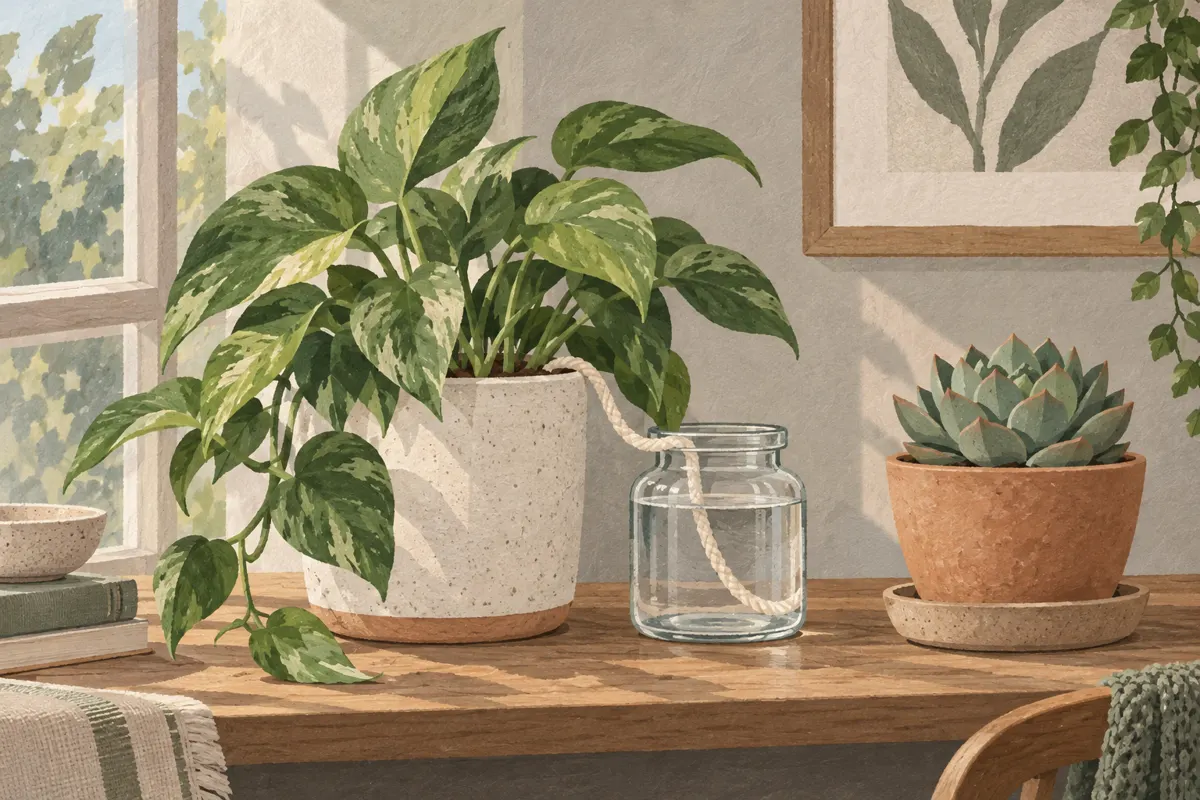
For a week away, water houseplants that are due for a drink, let excess water drain, and move them away from hot windows into indirect light. Give plants that usually dry out before seven days a tested water supply or arrange a check-in. Keep plants that need dry intervals out of constantly wet setups.
Sort plants by their usual watering needs
Start with how each plant behaves in your home. If its pot normally stays adequately moist for a week, it may need only its usual watering before departure. A plant you regularly water several times a week needs more support. The useful question is how quickly that particular pot dries, rather than whether one vacation method suits every houseplant.
- Plants that prefer steady moisture: consider an established self-watering pot, a tested wick, or a plant sitter.
- Plants that need soil to dry between waterings: preserve that dry interval instead of adding a continuous water supply.
- Succulents and cacti: keep them out of baths and other constantly damp arrangements.
- Orchids: avoid wicks and baths when their care requires drying between waterings.
Our proposed preparation step is to group pots by these needs and identify the ones that dry fastest. This gives you a short priority list instead of a reason to water everything heavily on departure day.
Water when needed and reduce heat exposure
For plants ready for watering, water thoroughly until excess comes through the drainage holes. Let the pots drain, then empty their saucers or decorative outer pots. Extra standing water is not a useful reserve for plants whose roots need periods with less moisture.
Move pots back from warm windows and direct sunlight to a spot with indirect light. Less heat and sun can reduce water use during your absence. Keep them away from heaters and air-conditioning vents, too. Choose a location that still provides light; a dark bathroom is not automatically a suitable place just because it has a tub.
Group plants with similar care needs together. This makes any check-in easier and avoids placing dry-loving plants into the same watering arrangement as thirsty ones. Consider how warm the room may become while the house is closed up.
Choose a simple supply for thirsty plants
If a plant already grows successfully in a self-watering container, fill its reservoir before leaving. These containers supply moisture from below. Continuous moisture does not suit every plant, so use this option where it already matches the plant’s needs.
A wick from a water container is another option for moisture-loving plants. Although the sources describe it for longer absences, it can also provide support during a week away. Its usefulness depends on whether your particular setup delivers water at an appropriate rate.
- Place a stable water container slightly above the pot without blocking the plant’s light.
- Soak a cotton cord or suitable wick, and water the plant before setting it up.
- Keep one end of the wick at the bottom of the reservoir and insert the other end into the potting mix.
- Test the arrangement before relying on it, checking both the soil and the remaining water.
Watering globes are an alternative, but their duration varies with the pot and potting mix. A globe can empty quickly in a small pot or loose mix. Start with damp soil and test it rather than assuming one full globe will last seven days.
Test the setup before departure
Begin preparing about a week ahead, and give a new globe or similar device at least three days of observation. Check whether the soil stays suitably moist, becomes persistently soggy, or dries despite water remaining in the reservoir. A larger supply helps only if water reaches the pot at a suitable rate.
The sources also describe standing moisture-loving plants on towels in shallow bathwater. This keeps pots in a wet arrangement, so exclude plants that need dry intervals and ensure the room has suitable light. For a mixed collection, our proposal is to use individual tested setups or a sitter rather than one shared bath.
Leave clear instructions if someone checks in
A trusted person is a useful option for plants whose needs your setup cannot reliably meet. Our proposed handover is a short note beside each group: which plants to check, how you normally judge that watering is due, and which pots should be left alone.
Leave your usual watering container accessible and explain that excess water should drain away. Specific instructions help prevent a well-meaning visitor from giving every plant the same drink, including those that are still wet.